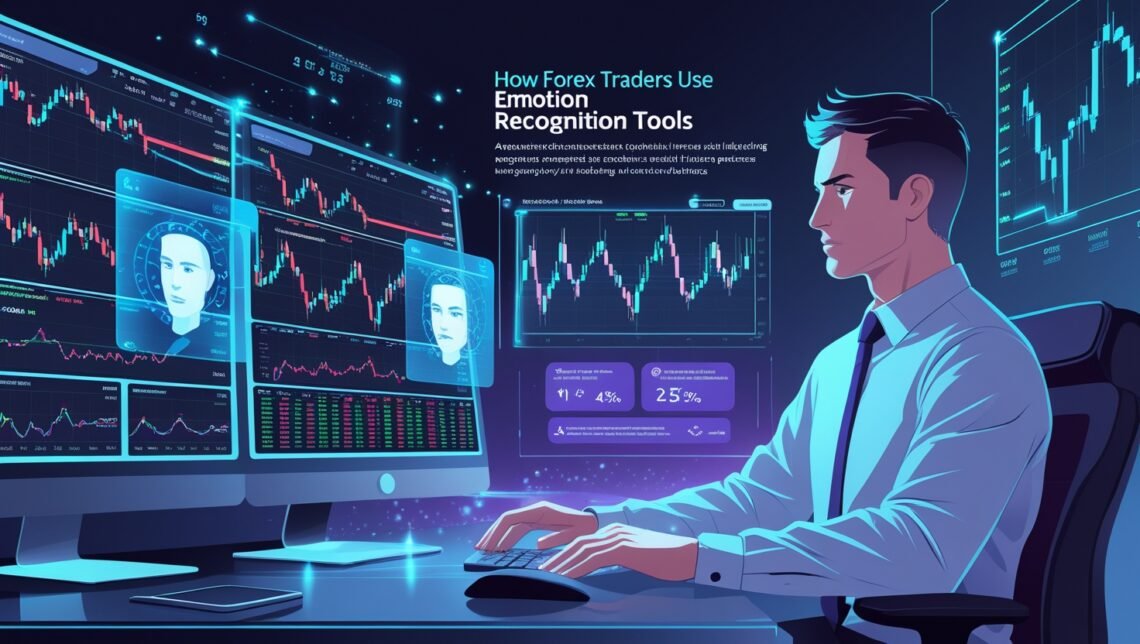
Forex trading is one such field where decisions are made very quickly, and emotions have a deep impact. When money is at stake, everyone can fall prey to stress, anxiety, or greed. This is why traders have now started using tools that can recognize their emotions. Emotion recognition tools are part of an advanced technology that identifies traders’ emotions from their facial expressions, voice tone, and physiological signals such as heartbeat or skin temperature. These tools rely on AI and machine learning to help guess a person’s current emotional state.
When a trader begins to understand his emotions, he is able to make better decisions, control impulsive behavior, and avoid losses. The purpose of this introduction is to show that emotion recognition tools are no longer just part of science fiction but are being actively used in real-world forex trading. This blog will explain how these tools work, how traders use them, and what the future of this technology holds in the trading world. This represents a new dimension that extends beyond traditional technical or fundamental analysis, incorporating psychological awareness as well. Emotional intelligence has now become a valuable asset for traders, enabling them to outperform others in the market.
What Are Emotion Recognition Tools and How Do They Work?
Emotion recognition tools are an advanced technology that analyzes a person’s facial expressions, tone of voice, and body signals to infer a person’s emotions. These tools use Artificial Intelligence and Machine Learning algorithms to understand a person’s internal feelings. In Forex trading, when a person is stressed or overly excited, their decision-making process can be easily guessed. The job of these tools is to understand the user’s emotions and give timely feedback. For example, if a trader is getting too anxious, the tool will alert him whether he is taking too much risk or should take a break. Some tools use facial recognition software, some detect emotions through voice tone analysis, and some through biometric devices.
This data is then integrated with the trading platform, where analytics are displayed. Traders use this data to track their behavior and learn how their emotional state is affecting their performance. These tools not only detect emotions but also analyze them to predict future behavior. In Forex, where every second is important, recognizing and understanding your emotions has become a major strategy. The correct use of these tools teaches you to trade with discipline and awareness.
Why Emotions Matter in Forex Trading:
Forex trading is a highly emotional game. Here, the market changes every second, and every small decision can result in your profit or loss. When a person trades, his emotions such as fear, greed, overconfidence or doubt directly affect his decisions. Due to fear, a person does not take the trade on time and misses the opportunity. Due to greed, he takes excessive risks and incurs into loss. Overconfidence makes one take such trades, which are done without research. Therefore, it is very important to understand what effect emotions have on trading. When you learn to control your emotions, your decision-making process improves. Emotion recognition tools help with this.
These tools tell you what emotional state you are in, and whether this state is good for your trading decisions. If you are stressed, you may trade impulsively. If you are calm, you will make rational decisions. Emotional discipline is the hallmark of a successful trader. These tools give you self-awareness. When you understand your psychological state, you use psychological analysis in addition to technical and fundamental analysis, which has become essential in today’s modern forex world. Emotional control can lead your trading journey towards long-term success.
How Traders Integrate Emotion Recognition into Their Strategies:
Modern forex traders don’t just rely on charts or indicators, but they also incorporate psychological tools into their strategy. The way to incorporate emotion recognition tools into a strategy is to first integrate these tools with your trading platform. Then these tools monitor your real-time expressions, heart rate, or voice tone. If you are moving towards a risky decision and your body language shows anxiety, the tool will alert you. Some traders make it part of their strategy to trade only when the tool indicates their emotional state is stable. This way, impulsive or emotional trades can be avoided. Some traders also do a daily or weekly analysis of their emotional data and see how their emotions are affecting their performance.
These tools also identify long-term patterns, for example, if you are anxious every Monday, it may not be a good trading day for you. These tools are included in the strategy so that decision-making is not just based on numbers, but also psychological readiness. This integration makes you a disciplined trader with self-awareness, which helps you avoid unnecessary losses. Traders who adopt this approach generally perform more consistently and stably.
Benefits and Limitations of Using Emotion Recognition Tools:
Emotion recognition tools have many benefits, but also have some limitations. The biggest benefit is that these tools give you feedback on your emotional state, which you can never identify yourself. When you realize that you are anxious, angry, or overexcited, you avoid making emotionally driven decisions. Another benefit is that these tools increase your self-awareness. You start to understand your patterns, such as when you trade impulsively, and in which emotional state you suffer more losses. This awareness teaches you discipline, which is present in every successful trader. But these tools have some limitations. Every person’s reaction and emotions are different, and AI is not 100% accurate every time. Sometimes the system misreads your emotional state.
Privacy is also an issue because these tools collect your facial data and biometric signals. Apart from this, some people just depend on these tools and leave their logical analysis, which is wrong. Tools are helpful, but they are just a support system; the final decision and responsibility lie with the trader. Their correct use can make you a strong and balanced trader, but if followed blindly, they can also become a source of risk. The society believes that these tools should be used for guidance, not for decisions.
Conclusion:
Emotion-aware trading is a new and powerful dimension of the forex world. Where previously the focus was only on technical and fundamental analysis, now traders have started considering their emotions equally important. Emotion recognition tools have become an integral part of this new approach. With the help of these tools, traders analyze not only the market but also themselves. In the coming times, these tools will become even smarter, and maybe AI will also be able to predict the behavior of traders. This means that you can know in advance in which mood you are trading and how that mood can affect your performance.
Trading platforms will start keeping these tools built into their systems in the future so that every trader has this facility. But it is also important to remember that no tool can replace human judgment. Emotion-aware trading does not mean that AI should make decisions, but that AI should support you so that you can make better decisions. This is the trading model of the future, where there is a fusion of technology and psychology. A trader who understands his emotions is able to handle market pressure much better. Ultimately, successful trading is not just about analysis but also about emotional discipline.
FAQs:
- What are emotion recognition tools, and how do they work?
Emotion recognition tools are advanced technologies that analyze a person’s facial expressions, voice tone, and physical signals like heart rate or skin temperature to detect their emotional state. These tools use artificial intelligence (AI) and machine learning algorithms to understand how a trader feels in real-time. If a trader is anxious or overly excited, the tool provides instant feedback and alerts them to take corrective action, such as pausing or reducing risk exposure. - Why are emotions important in forex trading?
Emotions play a critical role in forex trading because the market is fast-paced and decisions must be made quickly. Fear can cause traders to hesitate and miss opportunities, while greed can push them to take unnecessary risks. Overconfidence might lead to poorly researched trades. Recognizing and managing emotions can help traders make smarter, more disciplined decisions, which is why emotional awareness is now as important as technical or fundamental analysis. - How do traders integrate emotion recognition tools into their trading strategies?
Traders incorporate these tools by linking them with their trading platforms. The tools monitor the trader’s real-time emotional signals, such as facial expressions or heart rate. If the system detects emotional instability, it issues an alert. Some traders go further by using these readings to decide when to trade, only doing so when their emotional state is stable. Over time, they also analyze emotional trends (e.g., feeling more anxious on specific days) to refine their strategies. - What are the benefits and limitations of using emotion recognition tools?
The main benefits include increased self-awareness and emotional control. These tools help traders recognize emotions they might not even be consciously aware of, preventing impulsive decisions. They also support the development of emotional discipline. However, limitations include the potential for misinterpretation of emotions, since AI is not always 100% accurate. Privacy concerns also arise due to the collection of facial and biometric data. These tools should assist in decision-making, not replace human judgment. - Will emotion recognition tools become a standard part of future trading?
Yes, emotion-aware trading is expected to become a major trend. As AI continues to evolve, these tools will become smarter and more integrated into trading platforms. In the future, traders might receive predictive emotional insights before they even place a trade. However, while these tools will become more accessible and powerful, human judgment and emotional discipline will always be essential for long-term success in forex trading.